For more than half a century, space activity has been organized around missions: national security objectives, scientific exploration, and geopolitical signaling. That organizing logic produced extraordinary technical capability — and an industry that remains capital-intensive, bespoke, and structurally fragile.
This is not a story about immaturity, insufficient capital, or lack of ambition. It is a story about economic design. Space was never built to clear prices, cultivate repeat customers, or allocate capital efficiently. It was built to deliver outcomes under conditions where failure was unacceptable and substitutes did not exist.
That distinction matters, because markets and missions behave very differently. Markets discipline cost, reward repeatability, and punish unnecessary complexity. Missions tolerate inefficiency, reward specification compliance, and optimize for singular outcomes. Confusing the two has become one of the space sector’s most persistent analytical errors: the belief that systems built to achieve outcomes will naturally evolve into systems capable of sustaining demand.
They do not.
Markets discipline cost, reward repeatability, and punish unnecessary complexity. Missions tolerate inefficiency, reward specification compliance, and optimize for singular outcomes.
In the early 2000s, that logic was challenged — briefly, and in one critical domain. The emergence of SpaceX is often treated as proof that space has finally “gone commercial.” What it actually revealed was something more precise and far less generalizable: a rare case where a company arrived already behaving like a market actor inside a system still governed by mission economics.
I had a direct vantage point on that inflection. In 2004, I joined the Science and Technology Policy Institute, where I managed the space portfolio supporting the White House Office of Science and Technology Policy (OSTP). In that role, I was asked to help assess whether any commercial launch providers could credibly deliver cargo to the International Space Station following Shuttle retirement. This assessment would inform the design of NASA's Commercial Orbital TransportationServices (COTS) program - a fixed-price, milestone-based procurement intended to seed commercial cargo capabilities. The work had to be done before outcomes were known, before narratives hardened, and before success could be assumed.
What follows is an account of why one company crossed the boundary between missions and markets, and why most others, then and now, structurally could not. That distinction remains central to understanding where real markets in space can form, where capital is likely to be misallocated, and why commercial participation alone is still not enough.
Space Was Built to Win, Not to Sell
From the dawn of the space age through the Cold War, success was defined by outcomes, not customers.
Apollo was not a product; it was a geopolitical demonstration pursued without regard to cost or repeatability. Reconnaissance programs such as CORONA, GAMBIT, and HEXAGON were judged on coverage, resolution, and survivability, and not on unit economics. The GPS constellation, built to serve a military need, became a strategic public good, not a revenue-generating service, which explains why entire industries now depend on free GPS signals without funding their replacement or resilience. Scientific missions such as Hubble or the Mars rovers were justified by knowledge creation, even as costs escalated dramatically.
The buyer was singular. The objective was non-economic. The funding model reflected that reality.
Cost-plus procurement, bespoke architectures, and program-specific optimization were not failures of imagination. They were rational responses to deep uncertainty, asymmetric downside risk, and national-level stakes. That model worked extraordinarily well at building capability. It also produced an industrial base optimized for compliance, assurance, and performance margins rather than repeatability or cost discipline.
What it did not produce was a market.
For decades, there was no serious attempt to test whether space systems could be developed and procured differently at scale.
The Inflection Point: SpaceX and the Break from Mission Economics
SpaceX did not emerge from the legacy aerospace-industrial complex. It arrived with a Silicon Valley economic mindset applied to a sector that had never been treated that way.
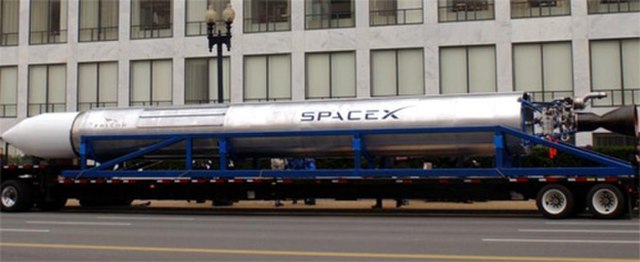
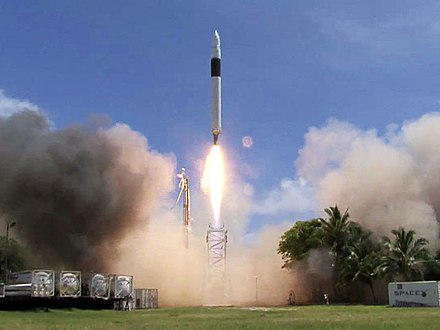
Rather than accepting cost-plus contracting as inevitable, Elon Musk pushed for fixed-price launch services. Rather than waiting for government programs to underwrite development, he committed substantial personal capital to building and flying Falcon 1. Rather than designing a vehicle to satisfy a single program office, SpaceX treated launch as a product it intended to sell repeatedly, with bounded configuration rather than bespoke redesign.
This was not simply a cultural shift. It was an economic one.
For the first time, a major space capability was developed under conditions where execution risk was internalized, failure was tolerated, and cost discipline was existential. That alone made SpaceX anomalous. What followed made it catalytic.
A View from Inside the Assessment
As part of OSTP’s support work, my team was asked to answer a fundamental question: could any commercial launch providers credibly deliver ISS cargo after Shuttle retirement in 2010?
This was not policy analysis in the abstract. It was a market viability assessment conducted under real uncertainty.
Over several months, I met directly with virtually every entrepreneurial launch company active at the time, including SpaceX, t/Space, SpaceDev, Microcosm, and others, as well as with the traditional primes: Lockheed Martin, Boeing, and Orbital Sciences. The discussions weren’t just about technical readiness. They focused on financial viability, access to capital, and whether these companies could survive the gap between limited government support and the true cost of developing a launch system.
It only made sense if SpaceX was planning to fly at volume, repeatedly, regardless of what NASA decided.
When I visited SpaceX’s facility in El Segundo, Gwynne Shotwell greeted our team. We then sat down with Elon Musk. There was no polished pitch deck. Instead, he walked us through his thinking and then through the factory floor. Hardware was everywhere. Tooling was being built. Engines, avionics, and structures were vertically integrated under one roof. The level of capital commitment, before any meaningful government contract existed, was striking.
It only made sense if SpaceX was planning to fly at volume, repeatedly, regardless of what NASA decided.
Our team estimated that developing a new orbital launch capability would require on the order of $400–500 million. COTS funding, at roughly $250 million spread across multiple winners, would not close that gap. Most entrepreneurial players lacked credible access to additional capital, and the traditional primes viewed COTS as fixed-price R&D with no guaranteed follow-on business: enormous downside for limited upside.
SpaceX was different. Musk was flying Falcon 1 on his own capital, whether NASA participated or not. The company was already building manufacturing infrastructure at scale.
Our conclusion was stark: SpaceX was doing this anyway.
COTS, for SpaceX, did not represent existential risk. It represented acceleration. While COTS might not create SpaceX’s capability, it could determine whether that capability survived long enough to matter.
Companies internalizing market risk before receiving government validation has become the most reliable indicator I've seen for separating durable space markets from mission-dependent activity.
This same pattern — companies internalizing market risk before receiving government validation — has since become the most reliable indicator I’ve seen for separating durable space markets from mission-dependent activity.
Why This Pattern Mattered
The insight was not that government support was unnecessary. It was that government support structured around market logic — fixed-price, milestone-based, with execution risk transferred to providers — only worked for companies already operating with market discipline.
COTS did not create SpaceX’s commitment to markets. It placed a bet on the only company already making that commitment.
NASA ultimately selected multiple providers, including SpaceX and Orbital Sciences, each bringing different approaches to the challenge. But the assessment revealed that only companies with prior capital commitments and market-oriented architectures could credibly navigate COTS's risk structure.
NASA’s COTS program became the first procurement framework to align government demand with market-oriented behavior. Rather than prescribing how cargo must be delivered, it specified outcomes and paid for results. Failure was survivable for NASA. It was company-ending for providers.
This structure was perilous for most participants. But for SpaceX — already committed, already assuming execution risk — it reduced rather than increased risk by providing validation without imposing program-specific design constraints.
COTS demonstrated that government procurement can align with market logic, but only when a company already exists that can survive under those rules.
Why Launch Changed First
Launch did not change first because it was visionary. It changed first because its economics were legible enough for market behavior to assert itself.
Launch has clear unit economics. Demand can be aggregated across civil, commercial, and defense users. Pricing can be expressed per flight. Substitutes exist. Failure, while costly, is not existential to national strategy in the way intelligence or deterrence missions are.
Even so, demand aggregation in launch remained fragile. SpaceX ultimately stabilized its economics by internalizing demand through Starlink. This is a reminder that even the most market-like space domains remain structurally thin.
SpaceX ultimately stabilized its economics by internalizing demand through Starlink. Even the most market-like space domains remain structurally thin.
Most other space capabilities do not share these characteristics. Earth observation, space situational awareness, missile warning, and high-end communications remain dominated by concentrated buyers, bespoke requirements, and suppressed price signals. Many companies attempted to replicate the SpaceX narrative without sharing its economic preconditions.
The results were predictable.
OneWeb, for example, raised $3.4 billion to deploy a broadband megaconstellation, treating launch cost reduction as sufficient proof of market viability. It wasn’t. The company entered bankruptcy in 2020 not because the technology failed, but because demand never materialized at the scale assumed. Execution capability, even at a lower cost, is not the same as a market.
The New Mistake: Treating the Exception as the Template
SpaceX’s success catalyzed a new generation of entrepreneurs and investors … and a new misconception.
Commercial participation alone does not create markets. Fixed-price contracts do not automatically imply demand. Venture capital does not substitute for customers. In many segments, companies pursued venture-style scaling strategies while remaining governed by mission economics.
The danger is not that SpaceX is misunderstood. It is that its success is treated as a generalizable recipe rather than a structurally rare outcome.
Contracts were treated as traction. Capability was treated as demand. Markets were declared before customers demonstrated willingness to pay repeatedly under competitive alternatives. Capital flowed accordingly, and in many cases is only now discovering that those “markets” remain mission-dependent.
The danger is not that SpaceX is misunderstood. It is that its success is treated as a generalizable recipe rather than a structurally rare outcome.
Why This Origin Story Still Matters
Today, the space sector is shaped by two competing organizing principles: mission-driven procurement and market-driven demand. The mission-driven model still governs most activity. But market-driven logic has been demonstrated, imperfectly and narrowly, in launch.
None of this implies that mission-driven demand is going away. On the contrary, geopolitical competition, growing concerns about space security, and renewed focus on cislunar access ensure that governments will remain the dominant buyers of space capabilities for decades. In many segments, mission urgency is increasing rather than receding.
For many companies, capturing that government demand is both rational and necessary. But existential importance does not change the underlying economics. Mission urgency increases spending, not market formation. It rewards bespoke systems, tolerates inefficiency, and suppresses price signals. Companies that conflate mission dependence with market validation may succeed as contractors, but they should do so with clear eyes about the limits of scalability, capital efficiency, and long-term optionality.
Confusion arises when success in one domain is assumed to generalize automatically to others. SpaceX worked because it was “doing this anyway.” It was building for anticipated demand rather than waiting for program requirements. Government support provided validation and acceleration, not creation.
Most space activities still lack that precondition. Companies are formed around programs, not in spite of them. Capital flows in response to procurement announcements rather than market pull. Architectures are optimized for compliance rather than repeatability.
The lesson from SpaceX was never that government programs create markets. It was that market-oriented companies can use government programs as acceleration capital, if they are already organized to survive without them.
The lesson from SpaceX was never that government programs create markets. It was that market-oriented companies can use government programs as acceleration capital, if they are already organized to survive without them.
That condition remains rare.
The future of the space economy will not be determined by how much capital is raised or how impressive the technology becomes. It will be determined by whether demand, and not missions, begins to shape what gets built, how systems are designed, and which capabilities are worth sustaining at scale.
This essay has focused on the origin of that distinction. In subsequent pieces, I’ll apply this lens more systematically: separating missions from markets, identifying where real demand is already forming, and showing why architecture, not ambition, determines which segments can make the transition from mission dependence to market discipline.
Space does not need more optimism. It needs clearer thinking about who pays, for what, how often, and under what alternatives. That clarity is what ultimately determines which parts of the sector can scale — and which will remain impressive but fragile achievements.